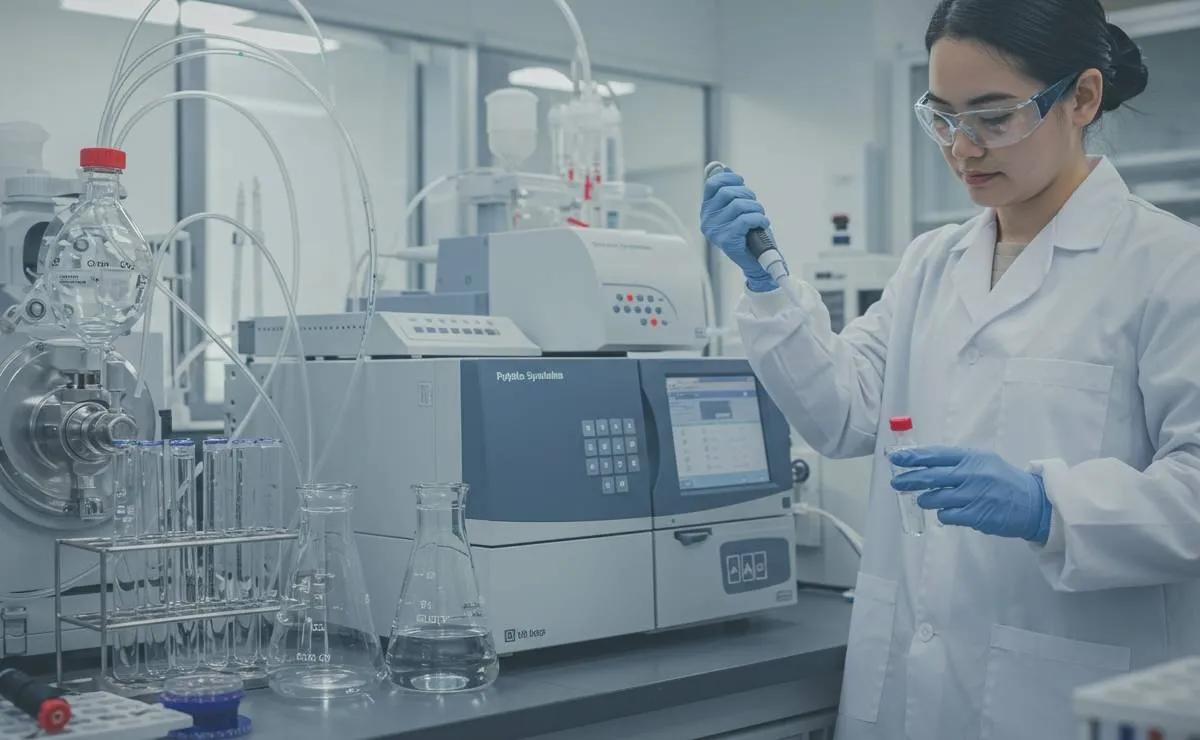

Peptides aren’t just buzzwords in labs these days—they’re the backbone of all sorts of modern research. Whether you work in molecular biology, pharmacology, endocrinology, or any other scientific field, you probably depend on these tiny chains to make sense of how cells communicate, how proteins behave, and what makes life tick. Thing is, as peptide research picks up steam, so does the number of suppliers trying to get your order.
But here’s the kicker—not all research peptides are the same.
The quality of the peptide can make or break your experiment. If you end up with something contaminated, mislabeled, or poorly made, you might waste weeks (or months) and walk away with misleading results. That’s pretty brutal when you’re aiming for real discovery.
So, whether you’re buying peptides for digging into receptors, protein functions, or drug screening, you’ve got to know what separates “lab-grade” from the rest. Here’s your plain-English guide for picking the right peptides, spotting quality, avoiding common mistakes, and thinking like a seasoned researcher when you size up suppliers.
Consistency is everything in science. If you can’t repeat and trust your results, none of it matters. Even the slightest impurity changes the way receptors interact, proteins respond, or molecules signal. High-quality peptides keep your data honest—they show what’s really happening, not just the quirks of bad manufacturing.
The best labs know this, which is why they only buy from companies they trust. No shortcuts.
Basically, they’re short chains of amino acids made for research—nothing to do with medicine, all about discovery. You’ll find peptides in projects studying cell signaling, growth factors, hormone pathways, neuroscience, immunology, receptor mechanisms, protein function, new drug candidates, or metabolism. Their specificity is the real draw: peptides let you probe molecular detail with precision.
If you remember nothing else, remember this: purity is king.
Purity means—how much of the stuff in that vial is actually your target sequence? During synthesis, you get leftovers, incomplete chains, and other junk. If the purity’s low, your experiment’s probably going sideways.
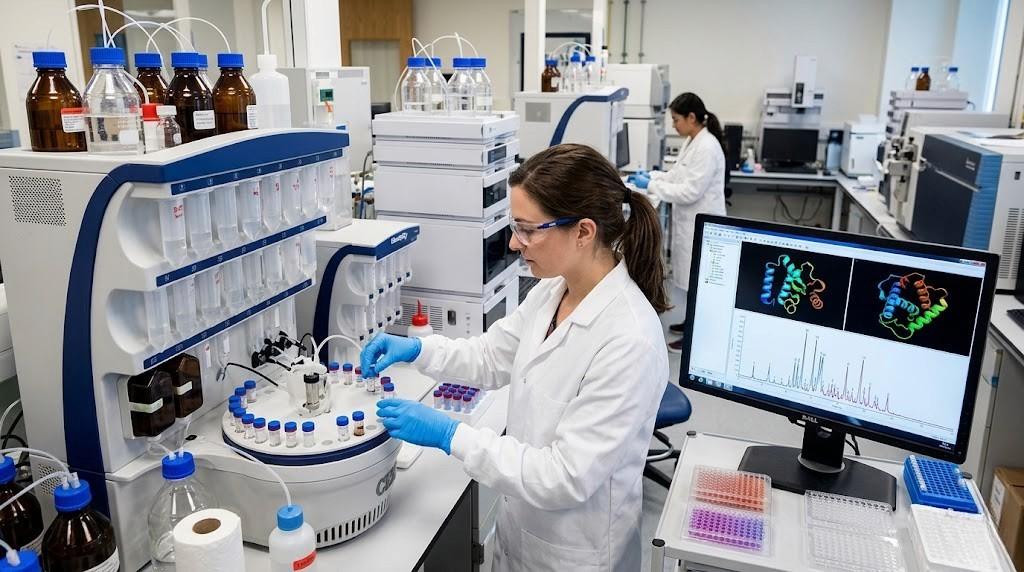
Solid suppliers purify their peptides with High-Performance Liquid Chromatography (HPLC). Most will actually publish the purity for every batch. If they don’t? That’s a red flag.

Any supplier worth their salt tests every batch with HPLC. This method separates out the pieces and tells you how much of the good stuff is in the vial.
The best-case scenario is third-party, independent testing. If the supplier shares HPLC chromatograms openly or on request, you’re dealing with a pro. Hiding results? Not a good sign.
HPLC is about purity, Mass Spectrometry checks identity. It tells you if the peptide has the right molecular weight—so you know it’s actually what you ordered.
Top suppliers always combine these tests. It’s the gold standard.

If a supplier’s legit, they’ll offer a COA with the details: product name, batch number, purity, molecular weight, test methods, storage tips, manufacturing info, and testing dates.
A COA means they’re accountable. If someone won’t give you one, walk away.
How peptides get synthesized and purified sets their quality. Serious manufacturers use precise equipment, experienced chemists, automated systems, and strict quality checks. All this keeps batch quality steady.
Experiments don’t happen overnight. You need new batches to match old ones if you want to compare results. Reliable suppliers always stick to standardized procedures; you get nearly identical peptides every time.
How open are they about methods, testing, packaging, storage, and shipping? If suppliers share lots of info, they usually know their stuff and stand by their products. If you have to dig for basics, ask questions—or reconsider.
Even perfectly made peptides go bad if stored wrong. The best suppliers use sterile glass vials, sealed containers, clear labels, moisture-proof packaging, and, if needed, materials that block light.
Some peptides need cold shipping—insulated packages with cooling materials. If your supplier cuts corners here, you risk losing quality.
Before you buy, look into who you’re dealing with. Longevity, consistency, customer service, expertise, proper documentation, and a solid reputation all matter. Online reviews? Take them with a grain of salt, but if everyone’s raving about quality, that’s reassuring.
The right supplier has people who actually know their products. If you have questions about storage, reconstitution, batch details, shipping, or specs, helpful companies answer quickly and professionally.
If a supplier’s promising miracle cures or results, be skeptical. Genuine companies focus on purity, manufacturing, testing, documentation, and scientific accuracy. No hype required.
Different peptides break down in different ways—heat, moisture, light, oxidation, and storage time all play a role. Know what the stability recommendations are, so you’re not sabotaging your own experiment.
Most peptides arrive freeze-dried (lyophilized). This keeps them stable longer. You mix them for use right before your experiment. It’s simple—if shelf life matters, pick lyophilized.
Cheap peptides almost always mean lower purity, less testing, sloppy manufacturing, weak quality control, and no verification. Sure, premium peptides cost more, but quality upfront saves big headaches later.
Good suppliers give you batch numbers, reports, manufacturing records, specs, and storage tips. This paperwork makes it easy to track results and prove repeatability.

Top manufacturers follow global quality systems—documented procedures, controlled environments, calibrated equipment, trained staff, strong assurance programs, and constant monitoring. All of this builds trust.
Be direct—ask:
Their answers show how seriously they take quality—and your research.
Don’t buy on price or marketing alone. Watch out for these slip-ups:
Stay sharp and your research will thank you.
Peptide manufacturing keeps changing. Modern companies use AI synthesis, automation, advanced purification, digital tracking, better testing, and greener processes. All this improves reliability and speeds things up.
Sticking with one supplier you trust pays off. You get consistent quality, familiar documentation, dependable support, easier ordering, and confidence your experiments will run smoothly.
Peptide science is only getting more advanced. AI, machine learning, automation, sophisticated chromatography, and next-gen analytical gear are making quality even better. Researchers win with higher purity, faster turnaround, tighter consistency, and clearer records.
Shopping for research peptides isn’t just clicking the cheapest link. You need to look at purity, testing, manufacturing standards, COAs, consistency, packaging, transparency, reputation, and support. When you take the time to check these things, your experiments run smoother and your results actually mean something.
Invest in premium peptides and solid quality control—it’s an investment in your science. As the field grows, only the researchers who demand quality will keep getting reliable, meaningful data. If you prioritize these basics today, you set yourself up for success tomorrow.