

Research peptides are at the heart of today’s biomedical science. Whether you’re deep into molecular biology, endocrinology, neuroscience, or the study of cell signaling, you can’t get far without reliable peptides. But here’s the catch: not all research peptides are created equal. Purity, how they’re made, quality checks, storage conditions, and even your supplier’s practices—each one can tip the scales on your experiments.
Plenty of scientists start off searching for the cheapest or fastest option, but if you want solid, repeatable results, you’ve got to look deeper. The right supplier protects your investment, keeps your data trustworthy, and—let’s be honest—saves you from a lot of wasted time.
This guide breaks down what really matters: how to spot top-tier research peptides, what quality testing looks like, how to judge suppliers, decode Certificates of Analysis (COAs), and sidestep the usual mistakes people make buying peptides for research.
Every experiment needs consistency. Even tiny impurities or sequence changes can throw off receptor binding, cellular responses, or your whole set of results. If you’re investigating specific molecular pathways, a contaminant or a single wrong amino acid in your peptide can make your data useless.
High-quality peptides really make the difference in:
Quality isn’t just important; it’s vital. If you cut corners here, the rest of your work can unravel fast.
Let’s talk specifics. Here’s what to look for:
Purity
First stop, purity. That’s the percentage of your actual, intended peptide in the mix, as opposed to leftovers or junk from the synthesis process. High-end peptides are always backed by purity data from real analytical tests. Less contamination means fewer unwanted surprises in your experiments.
A peptide is nothing without its precise sequence. One wrong amino acid can change its structure, halt its activity, or throw your results out the window. Responsible manufacturers double-check their sequences with advanced analytical tools before sending anything out.
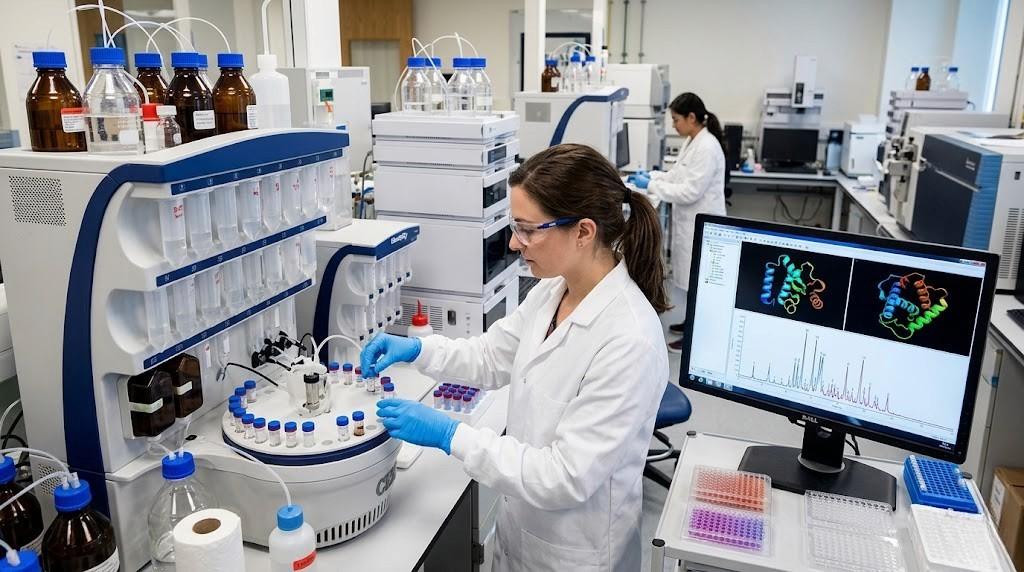
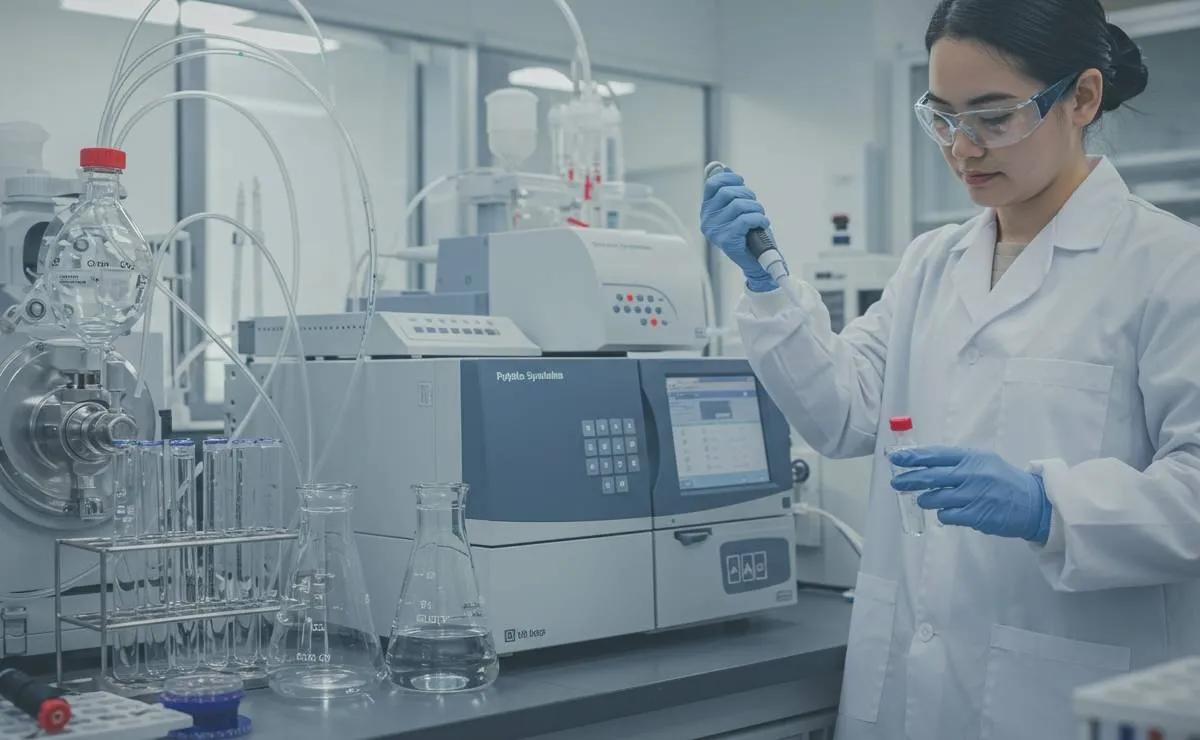
Most research peptides start with Solid-Phase Peptide Synthesis (SPPS). Good manufacturers use a tightly controlled process—adding each amino acid step by step and watching carefully to catch any mistakes.
You’ve probably seen purity percentages on COAs, but what does that number really mean? It’s the chunk of the material that’s actually your peptide, not side-products or incomplete bits left over from the synthesis. High purity = more confidence that the effects you observe are caused by your peptide, not something else.
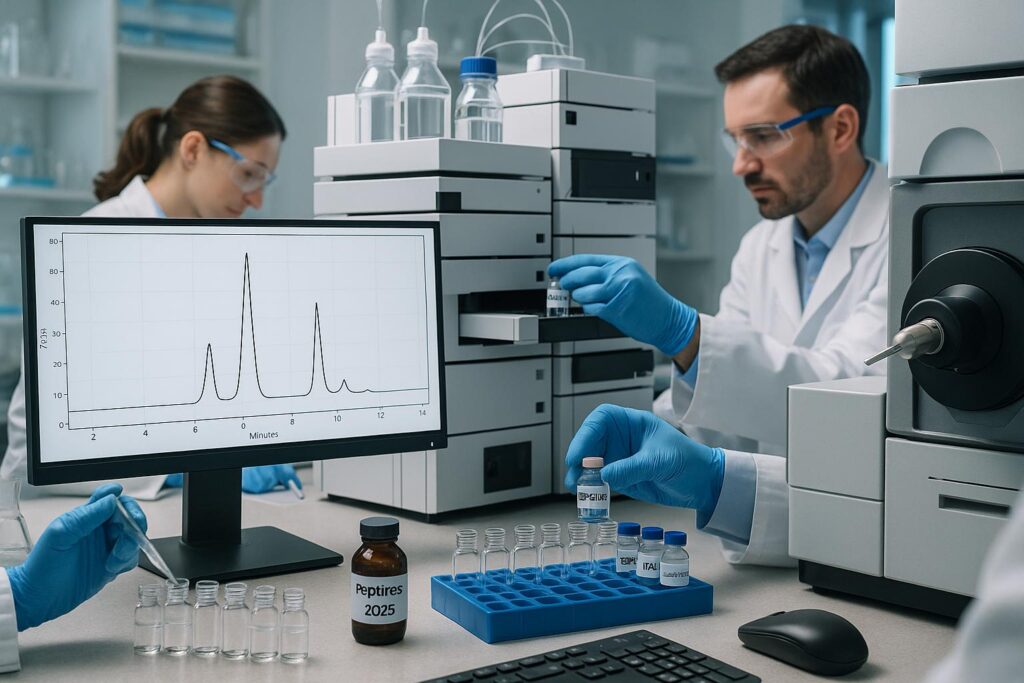
High-Performance Liquid Chromatography (HPLC) is the trusted method for checking purity. It separates peptides from contaminants and gives you a clear, detailed chromatogram. Reputable suppliers should hand over these results whenever you ask.
While HPLC focuses on purity, Mass Spectrometry (MS) tells you if you’ve got the right molecule at the right weight. This double-checks that your peptide is actually what it says on the label—a basic, non-negotiable for serious research.
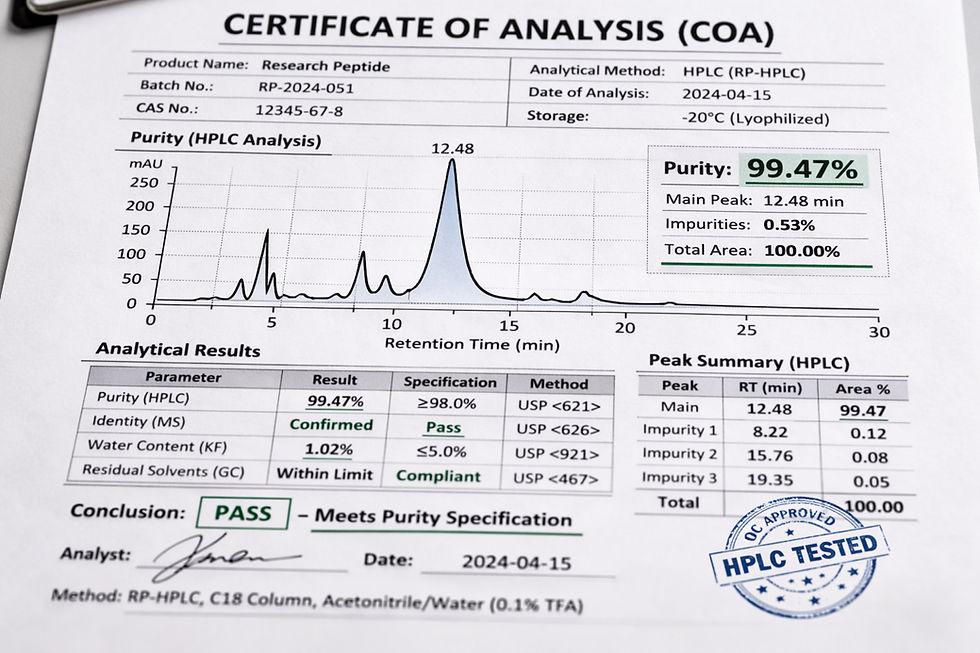
A Certificate of Analysis is your proof of quality. It includes everything you need to know: product name, batch number, date, purity results, HPLC and MS data, recommended storage, and lab info. If a supplier won’t give you a COA, that’s a red flag.
Science is all about reproducibility. You need peptides that perform the same way month after month, year after year. Stick with suppliers who run a tight ship and keep batches consistent—otherwise, you’ll never know if a difference in your results is due to your protocol or a change in the peptide.
Some suppliers have in-house, internal checks, but the best also send their peptides to outside labs. Independent testing is how you avoid bias and know the product meets standards, not just the company’s say-so.

Trusted suppliers run their manufacturing under strict, validated procedures: cleanrooms, regular equipment checks, detailed record-keeping, and strong contamination controls. These steps don’t just sound nice; they actually make your research more predictable.
A perfectly made peptide can still degrade if it’s stored badly—too hot, too wet, too much light. Double-check how your supplier handles storage and ask for temperature- and humidity-controlled shipping.
If the packaging’s shoddy, the contents may be, too. Look for individually labeled, sealed, sterile vials, secure shipping, and clear batch IDs. Proper packaging really does prevent contamination and damage in transit.
A good supplier lays out how they manufacture, test, store, and ship. They give you the info you need to make decisions without beating around the bush or hiding key details.
If you get a vague answer or a blank stare when you ask about storage, documentation, or quality test results, move on. Professional suppliers understand science and have actual human beings who can answer real technical questions.
Check what other scientists say. Peer feedback, years in business, and reputation matter.
Don’t just chase the lowest price, it often comes with hidden risks or lower quality. Don’t skip the paperwork (COA is essential). Always check storage info, and think twice before buying from an unknown or new supplier.
Peptide Stability
Even the best peptides need proper handling: stable temperature, no freeze-thaw cycles, minimal light/oxygen exposure. Follow the instructions or risk breakdown of your materials.
Research lives and dies on the ability to repeat experiments. Consistent manufacturing leads to reproducible results. Simple as that.
Peptide making isn’t standing still. Automation, new analytical tools, tighter process validation, and even AI are making a big impact. Modern suppliers are adopting smarter systems to boost quality and efficiency.
Even though research peptides aren’t clinical products, the best manufacturers stick to systems that track documentation, traceability, and quality assurance. Without these, it’s tough to rely on the research materials.
A good supplier isn’t just for one order—you want someone you can count on for future batches, fast support, and steady quality. Sticking with a reliable company saves you a lot of trouble down the road.
Get clear answers to these:
If a supplier dodges these, look elsewhere.
The whole field is moving fast—better automation, smarter analytics, AI-driven quality control, and more. As peptide science pushes into new areas like oncology, neuroscience, immunology, and regenerative medicine, the need for absolutely reliable peptides is only going up. The labs that stay focused on the best materials won’t just keep up—they’ll lead the way.
The peptides you choose will make or break your experiments. Don’t get caught up in the cheapest or quickest offer. Look for real value: purity, accurate sequence, strong verification, and supplier honesty. Always check the COA, demand HPLC/MS data, and pay attention to how the peptides are made and stored. In science, shortcuts just set you back. Invest the time and the effort up front, and your research will thank you for it later. Reliable peptides lead to reliable data, and that’s what drives real discoveries.